What is Osgood Schlatter’s Disease? (1)
Osgood Schlatter’s Disease is a pretty common cause of knee pain in growing adolescents. It most commonly presents in males between the ages of 10-15 and less frequently in females between 8-13 years of age.
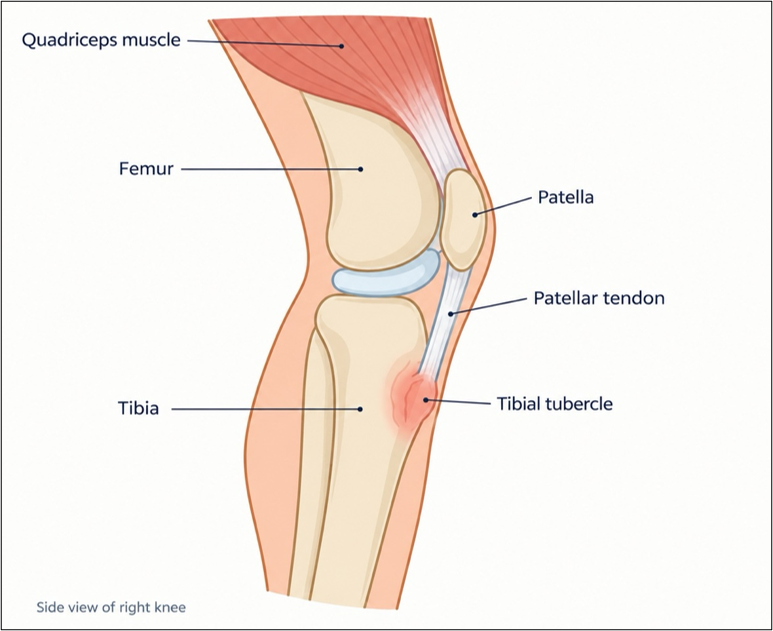
OSD affects the bony bump on your knee which sits just below your kneecap (patella) called the tibial tuberosity, which is where your patella tendon attaches onto. During adolescence, this part of your tibia is made of cartilage which is softer and weaker than mature bone. When you contract your quad muscle like when you jump or squat, this places load on the patella tendon and the tibial tuberosity.
Children that are extremely active and play lots of sports are doing this repeatedly day in, day out and when you pair that with a grow spurt where skeletal changes are happening at a rapid rate, you can get microtrauma and small fractures where the patella tendon attached to the tibial tuberosity. The result of this process is Osgood Schlatter’s which presents as pain and swelling at the knee.
What are the symptoms of Osgood Schlatter’s Disease? (2)
OSD can develop gradually or suddenly, often without a specific injury or accident. Common symptoms include:
Pain at the bony bump just below the kneecap.
Swelling at the knee, which may feel hot and look red.
Bending the knee or putting weight through it brings on pain.
In the case of repeated flare ups of Osgood Schlatter’s throughout adolescence, you may develop a prominent bony bump due to skeletal changes that occur during this period.
What causes Osgood Schlatter’s Disease? (3-5)
OSD occurs during a period of a growth spurt with a combination of repeated loading through the knee. There are multiple different factors that increase of the risk of developing this condition, some we can change, some we can’t!
ModifiableRisk factors we can change
Playing lots of high-impact sports like football, basketball, soccer and gymnastics during adolescence.
A tight quadriceps muscle has been linked to OSD.
Being overweight has been shown to increase the risk of developing OSD.
Non-modifiableRisk factors we can't change
OSD is much more common in boys.
Some variations in your anatomy can make you more susceptible to developing OSD. These include patella alta (a high kneecap) and increased posterior tibial slope, which is a steeper angle of your shin bone.
How is Osgood Schlatter’s Disease Diagnosed?
OSD is usually diagnosed by a physiotherapist through specific questions about your symptoms paired with a physical examination.
Imaging such as an X-ray is not typically needed to diagnose Osgood Schlatter’s Disease as it can be diagnosed clinically without unnecessary exposure to radiation. However, if symptoms are severe, persistent or atypical, an X-ray may be recommended to rule out other causes.
How is Osgood Schlatter’s Disease Managed? (2, 5, 6)
In an active early adolescent with OSD, it is likely they may experience intermittent flare ups of knee pain for a period until they reach skeletal maturity, which means symptom management and being mindful of exercise loads is super important!
The aim of physiotherapy treatment is to first settle your symptoms and keep you as active as possible during the process. Once your symptoms are stable, it’s important to address any contributing factors (like muscle weakness for example) that may be playing a role and develop strategies to help with symptom management in the future.
Management involves two overlapping stages: acute or short-term management, and long-term management.
Stage 1: Acute management
Goal: settle the pain and inflammation
- Ice for about 20 minutes, especially after exercise
- Pain relief, such as anti-inflammatory creams or medication
- Modify your load by pausing aggravating activities
- Gentle stretching of tight quadriceps
- Soft tissue massage to release muscle tightness
- Taping to reduce load on the tendon
Stage 2: Long-term rehab
Goal: return to sport and prevent flare-ups
- Load management: balance high-impact days with rest and low-impact activity
- Stretch, warm up and cool down before and after training
- Strength exercises to support and stabilise the knee
- Act early on flare-ups rather than waiting for them to get worse
Acute Management (2)
The first step is to get the pain and inflammation down. Here are some strategies to help:
- Ice: Apply an ice pack to the painful area for about 20minutes, particularly after exercise.
- Pain relief/ anti-inflammatory medications: Anti-inflammatory creams and medications like ibuprofen and voltaren may be appropriate.
- Modify your load: Remove activities that aggravate your knee pain (like high impact sports) until your symptoms are stable, then you can gradually reintroduce them under the guidance of your physiotherapist.
- Gentle stretching: Tight quadriceps can increase tension at the tibial tuberosity so regular stretching can help to improve muscle flexibility and assist in symptom management.
- Soft tissue massage: Like stretching, releasing muscle tightness through massage can provide pain relief.
- Taping: Different methods of sports taping can help to reduce tendon loads in the acute phase of rehabilitation. This can be helpful for pain relief and may allow you to return to physical activity sooner with less symptoms.
Long Term rehabilitation and returning to sport
Once the pain and inflammation has settled, it’s time to return to activity! To avoid re aggravating the knee, we need to gradually reintroduce different exercises while allowing time for the knee to adapt. Once you have successfully returned to sport, there are a few things you can do to prevent / manage future flare ups:
- Load management: While being regularly physically active is obviously important, it’s equally important to balance exercise with adequate rest. Try to avoid doing lots of high impact exercise on back-to-back days, break it up with some low impact activities to avoid pain flare ups and schedule in your rest days as you need.
- Regular stretching, warmups and cooldowns:(2, 5) To avoid getting tight muscles which can be a risk factor for OSD flare ups, make a conscious effort to stretch regularly before and after your training sessions.
- Strength exercises:(6) If your muscles aren’t strong enough to keep up with the demands of your training, strengthening exercises are needed to make sure you aren’t overloading certain structures and are giving your knee joint enough support and stability.
- Early management of flare ups: If you begin to feel your knee pain returning, get on top of your acute management early. Don’t wait for it to get worse, use your symptom management strategies and prioritise your training loads – don’t overdo it!
Who Should I See About Osgood Schlatter’s Disease?
Physiotherapists are a great first point of contact if you suspect your child has Osgood Schlatter’s disease. We are involved every step of the way, from initial diagnosis to long term management, we can help give you the tools to get the best outcomes and keep you moving.
Call the clinic on 03 9533 5305 for a clinical assessment and individualised treatment plan from one of our qualified physiotherapists.