

If you've ever dealt with jaw pain, clicking, tightness around your temples, or an aching feeling when you chew or talk, you've likely come across the term temporomandibular disorder (TMD). TMD is an umbrella term for problems affecting the jaw joint and the muscles that move it. Half of all TMD cases are driven primarily by the muscles themselves, a category known as muscular TMD (or mTMD).
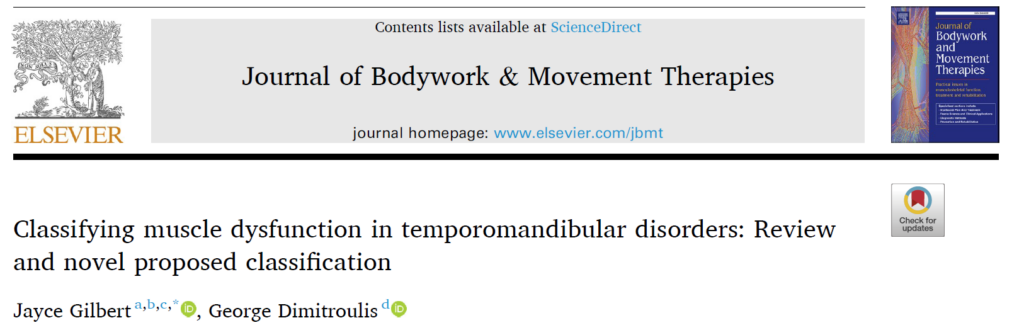
At Peak MSK Physio across our clinics in Cheltenham, Southbank and Hobart, treating jaw and facial pain is something we are passionate about. It's also an area where the science is still evolving. I recently worked a new classification of muscular TMD, alongside my colleague Dr Dimitroulis, publishing our findings in the July issue of the Journal of Bodywork & Movement Therapies. More importantly for you, here's what it means for how we assess and treat jaw pain in clinic.
The traditional view of muscle-related face and jaw pain
The current gold-standard system for diagnosing the ten different kinds of TMD is called the DC/TMD. It is excellent for communicating diagnosis and directing treatment. Roughly half of all TMD's are muscular. The diagnosis relies on whether the patient feels familiar pain when we press on that muscle. That's useful, but it can be taken further given the new science available since the DC/TMD came about. It doesn't capture muscle and pain issues like:
- How well someone can sense where their jaw or tongue actually is (proprioception)
- Whether their nervous system has become more sensitive over time
- Subtler signs like altered facial emotion recognition, which some people with long-standing facial pain develop
As physios, our assessment toolkit is much broader than "does pressing here hurt?" We look at movement, muscle tension, muscle memory (control), sensation, and the whole person. We think jaw pain classification should reflect that broader picture, and the more precisely we can describe what's actually going on with someone's problem, the more precisely we can treat it. This is the same lens we bring to any condition, such as back or neck pain, not just the jaw.
What I did
My colleague and I carried out a scoping review of the research published between 2022 and 2025, searching across six major databases. After screening more than 300 studies, and lots of coffee, we identified 16 papers that genuinely assessed muscular TMD in new ways, looking at things like altered pain sensitivity, motor control changes, psychosocial profiles, and novel assessment tools.
From those findings we built something practical: a five-category classification system that clinicians can actually use at the bedside, using tools already familiar to musculoskeletal physiotherapists.

The five categories, in plain terms
Normal muscle
No meaningful muscle involvement. If someone's jaw pain shows up here, we know to look elsewhere. Often it turns out to be a dental issue, not a muscular one.
Muscular pain
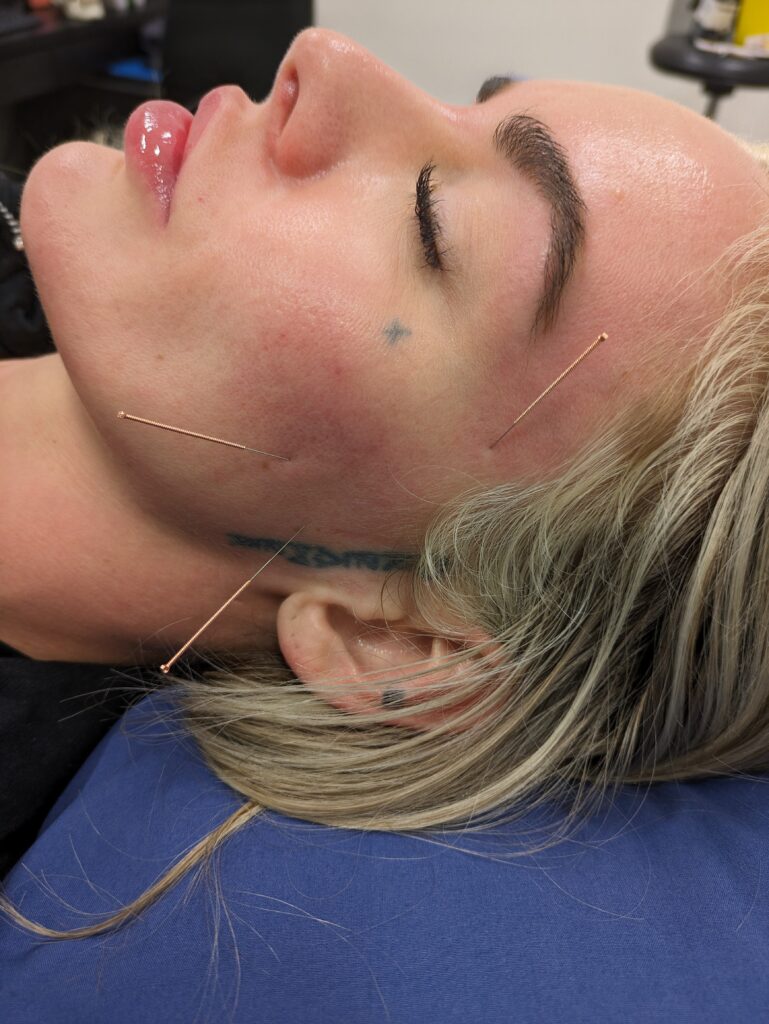
Local pain from the muscle itself, reproducible on touch or use, with the jaw still moving normally. This is often the "simplest" and most treatable presentation: think targeted manual therapy, dry needling, and retraining resting muscle tone.
Muscular pain with somatosensory change
Here, pain is starting to affect how far the jaw can open, and we start to see altered sensation — things like reduced awareness of jaw position or subtle changes in tactile discrimination around the face. Management starts to bring in the neck and sensorimotor retraining, not just the jaw itself.
Widespread muscular pain and dysregulated motor control
Pain is now present at rest, has spread beyond the original muscle, and we typically see wider issues, including neck involvement, more sensitised pain responses, and often a stronger psychosocial component (stress, poor sleep, low mood). This calls for a broader, team-based approach: pain science education, upper-body exercise, and often working alongside a GP or psychologist.
Orofacial somatosensory distortion
The most complex presentations. People here can struggle with things like telling left from right on their own face, or reading others' facial expressions accurately, signs that the brain's map of the face itself has become distorted by chronic pain. Treatment here draws on techniques like graded motor imagery and facial retraining, similar to how we manage complex regional pain syndrome elsewhere in the body.
Why this matters for you, our patients
Two people can both be told they have muscular TMD yet have completely different experiences that require different treatment plans. One might just need a few sessions of hands-on therapy and exercise. Another might have widespread sensitisation and genuinely need a more comprehensive approach from the physiotherapy toolkit.
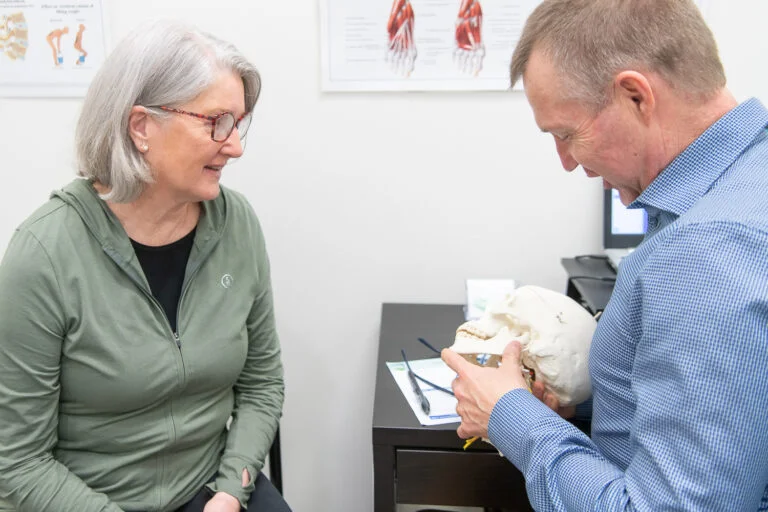
By assessing across this five-category framework, using simple, accessible tools like pressure sensors, two-point touch testing, and jaw position sense tasks, we can build a much clearer picture of why someone is in pain, not just where. That means:
- Identifying factors for targeted treatment
- Earlier identification of people who need a broader, or multiple approaches
- Better tracking of progress using measures that actually reflect what's changed
- Clearer conversations with dentists, oral surgeons, and other providers we work alongside
Still early days… and that's okay
Let's be honest: this is a proposed classification, built from expert clinical reasoning and the best available literature. It is not yet a validated tool. Like any good clinical framework, it needs to be tested, refined, and challenged by real-world cases over time. It's a meaningful step forward, and it's already shaping how we think about and assess jaw pain in clinic.
We are "profilers"
This same principle, to assess many different things for one issue, helps to profile and understand what's driving someone's problem, shaping how we treat every condition we see in clinic, not just the jaw.
This is really what we love about combining clinical practice with research. It's not about research for its own sake; it's about constantly asking "is there a better way to help the person in front of us?" and being willing to examine the evidence to find out.
If you're dealing with jaw pain, facial pain, or headaches that might be linked to muscle tension around the jaw, we'd love to help you get to the bottom of it. Get in touch to book an assessment.
Reference: Gilbert, J., & Dimitroulis, G. (2026). Classifying muscle dysfunction in temporomandibular disorders: Review and novel proposed classification. Journal of Bodywork & Movement Therapies, 47, 441–458.