

Written by Isabelle Stokie and Michael Michalas (Monash University DPT Student)
If you train regularly in the gym, chances are you’ve experienced some exercise related shoulder pain before, whether it’s during an exercise, or the next day 1. You’re not alone. Your shoulder joint is the most mobile joint in your body which means strength and joint stability are super important.
Shoulder pain doesn’t necessarily come down to one particular source or structure, it can be a combination of things like how well your muscles coordinate to support your shoulder joint 2, 3. It can be hard to know what to do or how to go about it!
Is it normal soreness or something worth getting checked?
Soreness after the gym can be normal, especially after a heavy weights session or after increasing your training load. What matters more is whether the pain is persistent and severe to the point where it affects your shoulder function 2.
It may be worth getting your shoulder assessed if:
- A particular movement or exercise consistently causes you symptoms.
- Pain is affecting your sleep and/or day-to-day activities.
- You have persistent shoulder pain, or pain that takes a long time to settle.
- Your shoulder feels stiff, weak, or less reliable under load.
- You become avoidant and fearful that using your shoulder will cause you pain.
Why does shoulder pain happen in the gym?
There may be many reasons why you're getting shoulder pain, so let’s break it down.
A lot of gym-related shoulder pain builds up when training demand starts to exceed what the shoulder can currently tolerate 2, 3. This can be in relation to weight, but overload can also come in the form of training volume, frequency and lack of efficient recovery. Training under fatigue or lifting weights that are beyond your capability often comes at the sacrifice of your exercise form, which is important in injury prevention.
Incorrect exercise technique may not always be a reflection of lack of strength or muscle endurance though, often it comes down to not knowing what is proper technique. This is where getting started with a trainer or industry professional can help to build a foundation of knowledge about what exercises should look and feel like.
Recovery is important to allow for muscle growth and repair, as is ensuring you’re fueling your body appropriately for the type of training you do. Training the same muscle groups on back to back days may put you at risk of an overload injury as the muscle doesn’t have enough time to repair and regenerate-think of it like training with a strained muscle 2, 4.
5 Common training mistakes:
1. Doing too much, too soon - The Load Spike Error
One of the most common reasons shoulder pain starts is a sudden spike in training load 3. That might be in the form of reps and sets or jumping back into heavy lifting after some time off. It can also be when you're first starting out, or starting something new.
What to do instead 3:
- Increase load and volume gradually, let your body adapt.
- Be cautious when reintroducing new exercises, particularly overhead. Start light and go from there.
- Look at your accumulative training loads across the week, not just one session alone.
2. Training through pain instead of modifying the lift - The Party On Error
It’s not uncommon for people to make the mistake of training through pain. While in many cases it’s possible the pain will eventually go away, there is a risk you may be doing more harm by not addressing the issue head on.
It’s important to understand that pain does not always mean there is structural damage BUT often it is our body’s way of telling us something is not quite right. If you notice there is particular movements or exercises that always give you pain, this is a good indication to make some modification 2, 4.
There are lots of ways you can try modifying the exercise to modify your pain, including:
- Reducing the weight/load.
- Shortening the range of motion.
- Try muscle activation exercises prior to your lifts.
- Adjusting your grip width or bench angle.
- Swap to dumbbells, cables, or another variation of the same exercise
If you aren’t able to modify your pain with those changes, it may be time to get your shoulder assessed by a professional.
3. Using pressing technique that does not suit your shoulder - The Rookie Error
Compound lifts like bench press and overhead press are not automatically bad for your shoulders, but technique matters. For some lifters, very wide grips, excessive elbow flare, poor control through range or suboptimal body positioning can play a role in shoulder pain 5.
It’s important to understand that everyone’s technique may look slightly different, this is to account for anatomical differences and personal preference. For example, someone with broad shoulders may prefer a slightly wider grip compared to someone with narrow shoulders. It’s also important to note that exercise variations which alter grip width place different demands on the shoulder so know what your trying to achieve with the exercises you are doing. No matter the variation, you should always prioritise your form above all else 5.
Key tips for checking exercise technique 5:
- Start with a neutral grip and slowly introduce grip variance.
- Maintain good control through full range of the movement, slow quality reps for the win.
- Try to minimize excessive elbow flare.
- Treat technique as something worth individualising, not forcing.
4. Having a lack of exercise variety.-Lack of Thought Error
Many gym programs put a lot of emphasis on heavy compound movements which can sometimes mean the smaller muscle groups (that are important for shoulder stability and motor control) are neglected 1, 6.
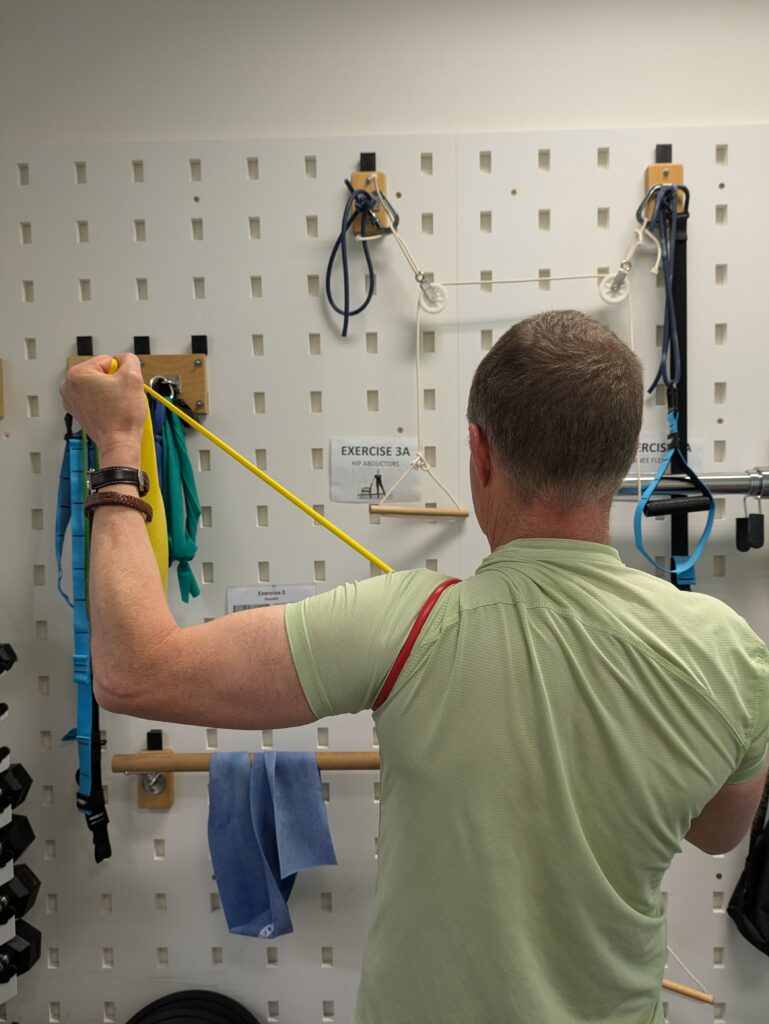
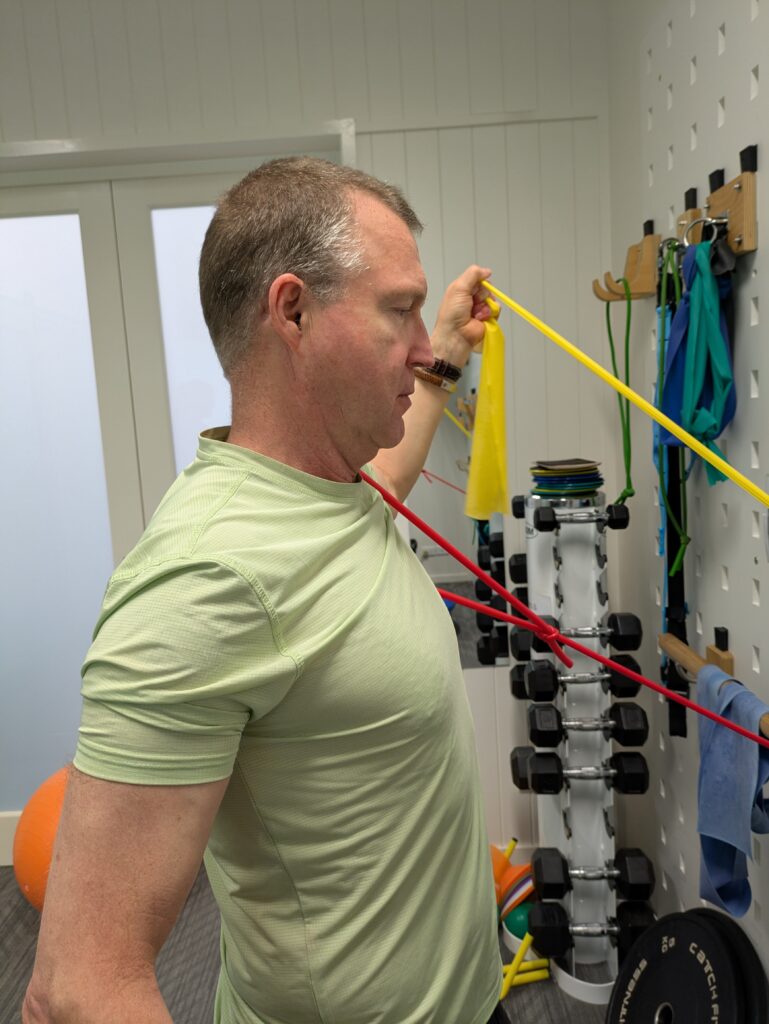
A large variety of exercises is a great way to ensure you are training a wide range of muscle groups in different shoulder positions. A shoulder program should include a combination of:
- push/pull movements
- unilateral (single arm) or bilateral (both arms) exercises.
- open chain (freely moving) and closed chain (against a surface) exercises.
It is also a good idea to work the shoulder in various positions, like overhead vs underarm so you are strengthening your shoulder through different ranges of movement.
5. Ignoring strength or mobility deficits - The Denial Error
Say an exercise doesn’t feel quite right. Is it because your joints or muscles lack the mobility to get into position, or is it because you don’t have the strength or motor control (muscle coordination) to do the exercise correctly?
To distinguish between a strength issue, or a mobility issue, try deloading the weight. If you are then able to get into the required position or reach target depth, it is most likely a strength deficit.
If deloading the weight does not fix the issue, it may be muscle tightness of joint stiffness that you need to look at. If you feel that muscle tightness is affecting your form or limiting your depth, try stretching before the exercise and see if that helps. It is also possible that the range restriction may be due to the joint itself which can be harder to assess- if this is the case, getting a formal assessment from a health professional may be necessary.
Progressive overload doesn’t always mean adding more weight, it may be reflected in improving your quality of movement, exercise depth or how the rep feels 1, 3, 7.
Physiotherapy finds the way out of gym-related shoulder pain?
Shoulder pain doesn’t mean you need to stop training altogether. In many cases, a physio assessment can help you identify the issue and provide strategies to allow you to continue training while you rehab 8, 9.
A physiotherapist will assess:
- Your recent and current training loads.
- Examine your training routine in relation to sport, or an activity you are preparing for.
- Your aggravating movements/exercises to identify likely cause.
- Shoulder biomechanics, ligamentous laxity, strength and motor control as well as passive and active joint range of motion.
- Screen for other contributors, such as the neck, upper back and your shoulder joint capsule.
Physiotherapy treatment may involve:
- Retraining proper muscle memory (motor control and skill of execution).
- Manual therapy (if indicated) including soft tissue massage and/or joint mobilisation.
- Education regarding load management.
- Integration of exercises that train the shoulder using the whole kinetic chain from the ground up.
- Individualised program targeted towards training goals.
Don’t wait to get help.
If your shoulder is getting in the way of your day-day, don’t wait. Early intervention is key for a quick and effective recovery. Book in with one of our physiotherapists today!
Book online or call (03) 9533 5305